All you ever wanted to know about athlons, One through Ten!
Athlon: Not a sporting event, but apparently a sporting goods company. And now you know.
Of course, it is also a term derived from athalon, from the Latin for "competition." It's the same word from which we get "athlete" today. (One Wikipedia page (aquathlon, for future reference) seems to think that it really means "wrestling," but Wikipedia spelled Latin "latten," so, you know.)
Biathlon: Usually refers to a winter sport combining cross country skiing and shooting. Apparently, the sport can trace its roots to exercises that promoted Norwegian national defense. Of course it does. The summer version is cross country running and shooting, and the "modern biathlon" refers to running and swimming.
Triathlon: Swimming, running, biking. Not necessarily in that order. (I actually don't know. Maybe you do have to do it in that order?) Apparently we have only the French to blame, or maybe San Diego. Wikipedia does not give me a solid answer. The Ironman is specifically a 2.4 mile swim, a 112 mile bike course, and then, uh, if you're not tired yet, a marathon. Holy crap.
Quadrathlon: Swimming, kayaking, cycling, running. Uh. What? Apparently, sometimes roller skating is also involved. I'm dubious. Here's a quote, straight from Wikipedia: "Quadrathlon adds flatwater kayaking to the sport of triathlon to create a balanced test of fitness." Right. Not to be confused with the Tetrathlon, which involves riding a mount over a course of obstacles, shooting an air pistol, cross country running, and swimming.
Pentathlon: MYTHOLOGY ALERT! The pentathlon was an ancient Greek sport, featured in the Ancient Olympics (man I love those). The mythical hero Perseus accidentally killed a dude (though not the Gorgon, that was a different time) with a discus while competing in the pentathlon, fulfilling an oracle's prophesy.
Mouth guards, people! They matter.
Originally (as in "Ancient Greece" originally), the pentathlon was part of military training. Aristotle once wrote "a body capable of enduring all efforts, either of the racecourse or of bodily strength...This is why the athletes in the pentathlon are most beautiful." (Right, Aristotle.)In 1906, the pentathlon made its modern Olympic debut as a conglomeration of five track and field events, but it was discontinued in 1984 and replaced by the heptathlon because it kept getting confused with the "modern pentathlon."
The modern pentathlon was introduced in the 1912 Olympics. Returning to the -athlon's military training roots, the sport was invented by Pierre de Coubertin, founder and first president of the IOC. He wanted to test skills required by a soldier (so this was sort of like the Norwegians, but with less snow). According to Wikipeda, he was "working from the template of a 19th century soldier fighting behind enemy lines," and came up with epee fencing, pistol shooting, freestyle swimming, show jumping on horseback, and a cross country run. It basically has all the elements of an amazing action flick. The sport was male dominated until Sydney 2000, female athletes got a chance to show off their James Bond meets The Great Escape skills. Sexy awesome!
Sextathlon: Either a dirty joke or a Frenchman named Ygor swimming, biking, running (in scandalous shorts), then skiing (in the middle of a city?), golfing, and playing a game of hockey. Perhaps the proper term is Hexathlon, which is referred to in this exerpt from a blog about the game of bridge: "The Modern Hexathlon combines traditional disciplines of track and field (javelin throw, long jump and marathon) with aquatics (200-meter backstroke, 400-meter freestyle and high diving)... The Modern Hexathlon also relates well to bridge, as these six problems illustrate." Then there are six bridge problems, like those things that show up near Dear Abby in the paper. The internet really is killing the newspaper! In the most boring way possible!
Heptathlon: Seven events! One day! Here's what's in store: 100m hurdles, high jump, shot put, 200 m race, long jump, javelin throw, 800 m race. Wow. It also involves the academic decathlon, because scoring has an equation that looks like you might need better than basic math skills. Seriously, there are variables and constants.
Octathlon: Occasionally, in Tahiti, you try to host a decathlon. But the pole vault equipment doesn't arrive on time, and you have to abandon the high jump and the pole vault entirely. So you have to change the name of the event entirely, because you can't call it a decathlon with only eight events. The Tahition Olympic Committee isn't happy about it, but then they realize that they're in Tahiti and pretty okay with life, all things told.
Nonathlon: Something involving an indoor rowing machine. We're getting farther away from international athletic competition here, people.
Decathlon: Finally! Ten events! Amazing! They are spread over two days and encompass the 100 m, the long jump, the shot put, the high jump, the 400 m, 110 m hurdles, the discus, the pole vault, the javelin, and the 1500 m. Basically, if you can run it or chuck it, you do.
There we have it, one through ten. Only four of these events are in the Olympics and a couple aren't really, you know, real. But hey! Any Athlon is a good Athlon, right? Speaking of which, if you absolutely want more...
Other athlons (also known as "I forgot how to count in Greek and so did much extraneous googling"):
Duathlon: Woah, confusing! Though it sounds like it should be back down there with biathlon in the 2 slot, actually has three (or maybe two?) events. Most commonly, the term refers to running, then biking, then running again. Duathlon is also used for the winter sport of skiing cross country (traditionally) and then changing your skis to ski cross country some more, only this time with the skate skis! Exciting times on those nordic tracks.
Aquathlon: Underwater wrestling. Maybe could also mean swimming followed by running, but that wouldn't involve (supposedly sexy) underwater wrestling, now would it? But wait, now I am plagued by questions! How does that even work? Do the athletes float? Are they weighted down? Do they have oxygen? Are they allowed to go up for breaths? Is Wikipedia lying to me again?
Quintathlon: The best definition I can find comes from a website touting the wonders of Alaska. They advertise the "Barefoot in the Park Quintathlon: Swim, bike, shoot, kayak and run, then picnic in the park." Picnic makes it six events, though. I wonder if the organizers thought about THAT.
Showing posts with label Wikipedia sometimes lies to me. Show all posts
Showing posts with label Wikipedia sometimes lies to me. Show all posts
Friday, August 28, 2009

Saturday, May 10, 2008
An Adventure in Symbology, Part 2: THE RINGS
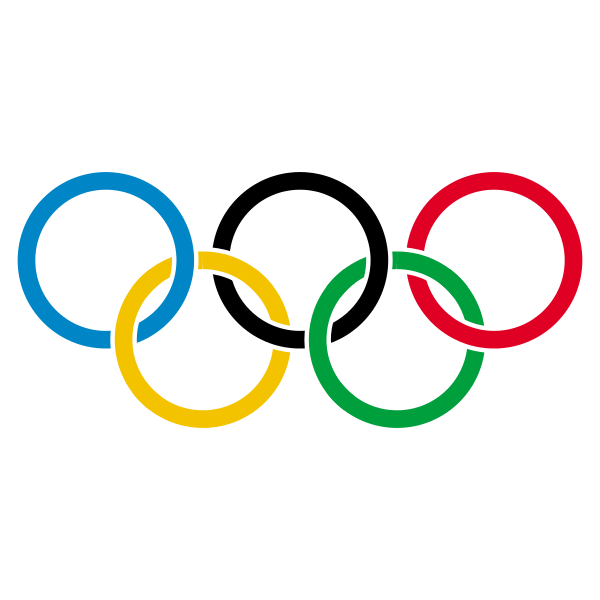 The Olympic Rings: just the sight of those five wants to make you start humming that triumphant John Williams trumpet solo, doesn't it? But the real story behind the symbol is full of intrigue and falsehoods, everything from the false involvement of Swiss psychiatrists to faked ancient symbolism. Just smell that Adventure History starting to cook!
Let's explore, shall we?
The five-ringed symbol we all know and love was initially brought before the world Congress of 1914 (back when they could take anything called "the world Congress" seriously) to "represent the five parts of the world which now are won over to Olympism and willing to accept healthy competition." (That's the problem with those damn penguins-- they play too damn dirty.)
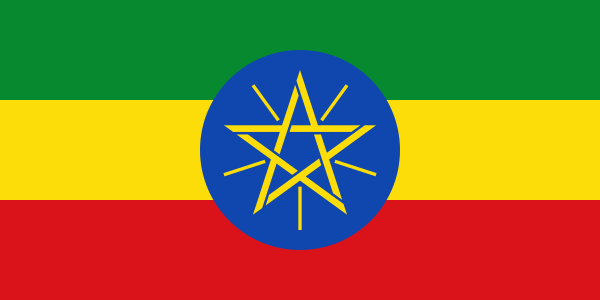
The six colors are meant to represent the flags of the world, with at least one color appearing on every flag in the world. Not all at the same time, clearly. Otherwise we would have many more amazing technicolor flags. We can't all be as cool as Ethiopia.
Initially, the colors were assigned to very specific flags. The blue was for Sweden, the blue and white was for Greece, blue, white, and red were for the English, American, German, Belgian, Italian, and Hungarian flags. The yellow and red were for the Spanish flag (with the Brazilian and Australian innovations, whatever the hell that means). Also Japan and China. As Coubertin himself wrote, "Voilá vraiment un embléme international!" (The exclamation point is mine.)
I just want you all to know that I just translated that from French. I don't speak French. I sacrifice so much for you people. FYI.
The countries that Coubertin listed are significant for what they omitted. South Africa, for instance, was not mentioned, although South African athletes had competed at every Olympic games since 1896. (Upcoming blog post alert: Imperialism and the Olympics, YAY.)
Wikipedia infers that the original interlocked ring design originally came from Carl Jung (yes, that Carl Jung) because somebody doesn't know how to read academic texts. Jung's involvement is, in fact, a lie. The good doctor merely enjoyed the nature of interlocking rings in general, not necessarily the Olympic symbol in particular. This is actually what the official Olympic pamphlet says:
Oh, Wikipedia, when will you tell me true facts? I was all excited, too, because that Carl Jung reference was really cool. Damn my academic training and my propensity to look at primary sources!Circles, after all, connote wholeness (as we are told by the psychologist Karl Jung), the interlocking of them, continuity.
Anyway, back to the rings.
For the great big 1936 torch relay (we discussed this in Part 1, if you recall), the Germans decided to go all out, visiting all kinds of historic Greek sites. With a flair for drama and ancient symbolism, the organizers carved the five rings into an ancient pillar at Delphi (as in "the Oracles at").
 Nazis are vandalizing ancient treasures?!
Where is Indiana Jones when you need him?
In the 1950s, two historians visited Delphi, found the stone, and thought they had unearthed a crucial link from the past. In their history of the ancient Olympic games, they mistakenly reported that they had found an authentic relic. Whoops!
This reference was then spread by people too lazy to figure out (as Paul Harvey would say) the Rest of the Story. But now you know.
Ultimately, the appeal of the Olympic rings lies not in their ancient history, nor their more recent slightly imperialist history, nor their tenuous ties to significant Swiss psychiatrists. The five rings represent an image that is indelibly burned into the brains of billions across the globe: the symbol itself constitutes some common knowledge that the whole world shares.
Plus, it's just so easy to riff off the image, be it for the purpose of parody, protest, or ceremony.
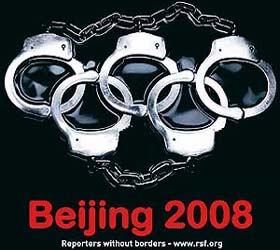


Stately!
Image sources: Wikipedia, bbc.co.uk, chinadaily.co.cn, laphamsquarterly.org, tribuneindia.com
References: "This Great Symbol: Tricks of History" by Robert Knight Barney, Wikipedia (though it gave me lies), vancouver2010.com/en
Subscribe to:
Posts (Atom)