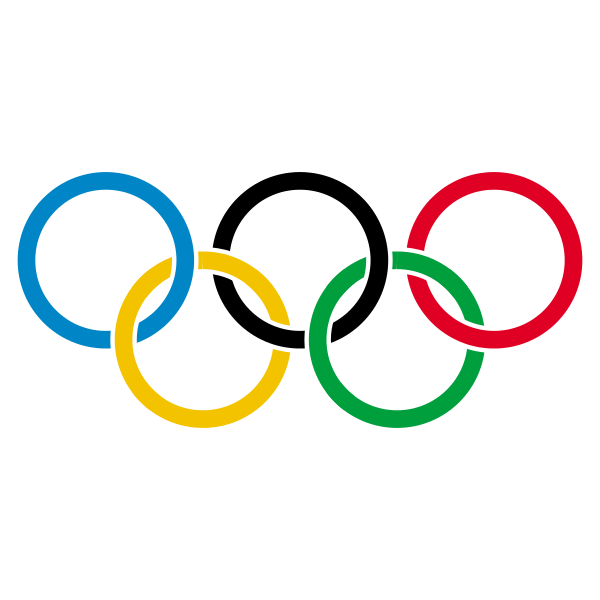
The Olympic Rings: just the sight of those five wants to make you start humming that triumphant John Williams trumpet solo, doesn't it? But the real story behind the symbol is full of intrigue and falsehoods, everything from the false involvement of Swiss psychiatrists to faked ancient symbolism. Just smell that Adventure History starting to cook!
Let's explore, shall we?
The five-ringed symbol we all know and love was initially brought before the world Congress of 1914 (back when they could take anything called "the world Congress" seriously) to "represent the five parts of the world which now are won over to Olympism and willing to accept healthy competition." (
That's the problem with those damn penguins-- they play too damn dirty.)
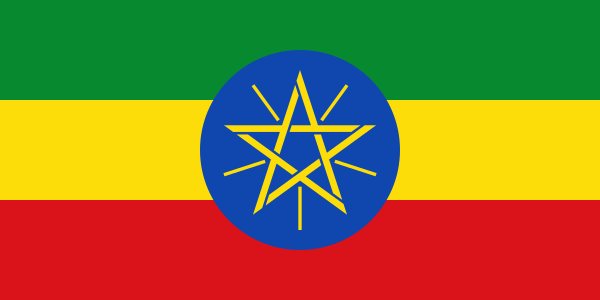
The six colors are meant to represent the flags of the world, with at least one color appearing on every flag in the world. Not all at the same time, clearly. Otherwise we would have many more amazing technicolor flags. We can't all be as cool as
Ethiopia.
Initially, the colors were assigned to very specific flags. The blue was for Sweden, the blue and white was for Greece, blue, white, and red were for the English, American, German, Belgian, Italian, and Hungarian flags. The yellow and red were for the Spanish flag (with the Brazilian and Australian innovations, whatever the hell that means). Also Japan and China. As Coubertin himself wrote, "Voilá vraiment un embléme international!" (The exclamation point is mine.)
I just want you all to know that I just translated that from French. I don't speak French. I sacrifice so much for you people. FYI.
The countries that Coubertin listed are significant for what they omitted. South Africa, for instance, was not mentioned, although South African athletes had competed at every Olympic games since 1896. (Upcoming blog post alert: Imperialism and the Olympics, YAY.)
Wikipedia infers that the original interlocked ring design originally came from Carl Jung (yes,
that Carl Jung) because somebody doesn't know how to read academic texts. Jung's involvement is, in fact, a lie. The good doctor merely enjoyed the nature of interlocking rings in general, not necessarily the Olympic symbol in particular. This is actually what the official Olympic pamphlet says:
Circles, after all, connote wholeness (as we are told by the psychologist Karl Jung), the interlocking of them, continuity.
Oh, Wikipedia, when will you tell me true facts? I was all excited, too, because that Carl Jung reference was really cool. Damn my academic training and my propensity to look at primary sources!
Anyway, back to the rings.
For the great big 1936 torch relay (we discussed this in Part 1, if you recall), the Germans decided to go all out, visiting all kinds of historic Greek sites. With a flair for drama and ancient symbolism, the organizers carved the five rings into an ancient pillar at Delphi (as in "the Oracles at").
 Nazis are vandalizing ancient treasures?!
Where is Indiana Jones when you need him?
In the 1950s, two historians visited Delphi, found the stone, and thought they had unearthed a crucial link from the past. In their history of the ancient Olympic games, they mistakenly reported that they had found an authentic relic. Whoops!
This reference was then spread by people too lazy to figure out (as Paul Harvey would say) the Rest of the Story. But now you know.
Ultimately, the appeal of the Olympic rings lies not in their ancient history, nor their more recent slightly imperialist history, nor their tenuous ties to significant Swiss psychiatrists. The five rings represent an image that is indelibly burned into the brains of billions across the globe: the symbol itself constitutes some common knowledge that the whole world shares.
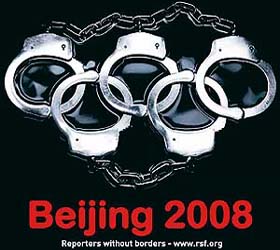
Plus, it's just so easy to riff off the image, be it for the purpose of parody, protest, or ceremony.


Stately! Image sources: Wikipedia, bbc.co.uk, chinadaily.co.cn, laphamsquarterly.org, tribuneindia.com
References: "This Great Symbol: Tricks of History" by Robert Knight Barney, Wikipedia (though it gave me lies), vancouver2010.com/en